
World Day of Social Justice
Today, 20th February, marks World Day of Social Justice – a day to reflect on the strides made to improve people’s political, economic, and social rights. This year, the theme “Empowering Inclusion: Bridging Gaps for Social Justice” turns our attention to the importance of including marginalised communities in decision-making, and to reducing the gaps that cause social exclusion.
Yet as we mark this day, recent Home Office proposals aim to do the very opposite, widening gaps that exclude many refugees. Currently, if you are recognised as needing protection, you are allowed to remain in the UK for 5 years, after which you can claim settlement status, allowing you to stay permanently. For many refugee friends, settlement can mean knowing it is safe to rebuild their lives as part of the community and take steps towards recovery.
The proposed changes will mean that newly recognised refugees will initially be allowed to remain for only 2.5 years and may then have to wait up to 20 years before obtaining permanent leave to remain in the UK. This change will keep refugees in an exhausting limbo, forced to prove their protection needs over and over again. For context: a person recognised as a refugee at age 25 may not obtain security until their mid-40s.
Not only is this process incredibly expensive, but it also makes it harder for people to integrate, unfairly undermining refugee friends’ rights and opportunities. Research has shown that employers may be less willing to hire someone with limited leave to remain because of uncertainty about their residency status, even though many refugees are eager to work. It also means that people who have been recognised as needing protection will have to wait longer for the right to vote. Additionally, rewarding higher earners with easier access to citizenship while punishing refugees is not only unjust, but it also rejects the UK’s obligation to, as far as possible, expedite routes to naturalisation proceedings for refugees (Article 34, 1951 Refugee Convention).
At JRS UK, we are empowered to bridge these gaps and promote social justice. Refugee friends’ voices are central to our work; refugee friends volunteer and lead activities, provide feedback and co-design our services (thereby ensuring that our services match their needs), and sit on our Governance Committee.
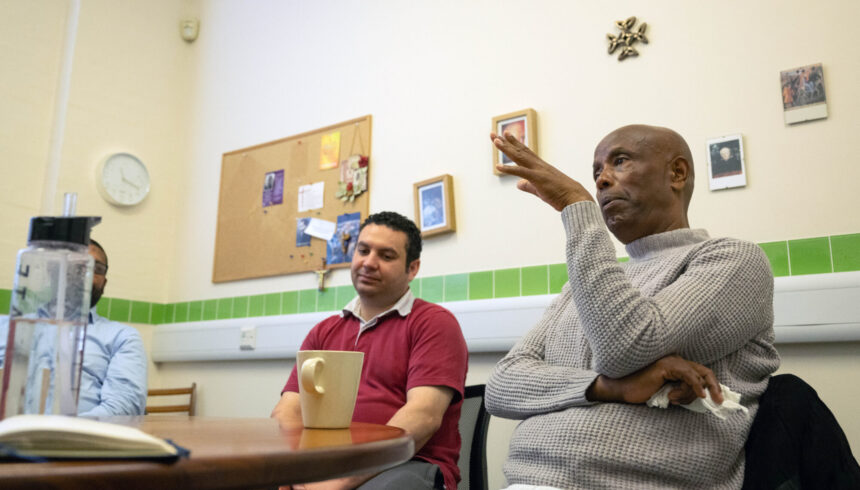
Our Senior Policy Officer, Sophie Cartwright, convenes Refugees Call for Change, a group where refugee friends discuss recent policy changes and their potential impact, learn advocacy techniques, campaign against government bills and proposals, and respond to consultations. One member shared his concern that the earned settlement proposals will “keep people shackled to the home office” and make receiving settlement harder than it needs to be.
For our refugee friends who are barred from accessing public funds, they also face significant challenges to participating in society and having equal opportunities. They are denied accommodation or financial support despite not having the right to work or rent. This inevitably makes people more vulnerable to exploitation and can strip people of their self-confidence. One friend shared how this has impacted her mental health: “If I was allowed to work in this country, I would have provided them [my family with] food, but I am not allowed to work. I am not allowed to do anything here. I keep thinking a lot, thinking, and thinking and feeling like I am going mad. I cannot sleep at night.”
Through your support, refugee friends can access practical support that meets essential needs – food, toiletries, phone credit, and financial assistance – in ways that restore agency and choice. For instance, fortnightly hardship grants support refugee friends to cover food and transport costs, helping friends to attend appointments, visit our centre in Wapping, and choose their own food without financial barriers. One friend shared that “Now I have the money to travel, I can come to the centre for a shower, proper food, and clothes. It uplifts me, and I am getting my confidence back.”
Empowering inclusion is not a one-day theme at JRS UK; it runs throughout our work, from hardship grants that restore financial agency to our advocacy work that amplifies refugee friends’ voices. As more barriers to social justice are put up against refugee friends, JRS UK is working across the board to protect the dignity of all persons.
Today, on World Day of Social Justice, JRS UK remains as committed as ever to reducing exclusion, exploitation, and poverty. As we continue to advocate for our refugee friends, we urge you to write to your local MP and ask them to oppose the earned settlement proposals and push for fairer routes to settlement for refugees.
As one friend urged: “Speak and be our voice! Ask the government to reduce the years”
