

This year marks the 75th anniversary of the Refugee Convention. The Convention was written in the aftermath of the second world war, in response to the huge displacement that had occurred, and the massive barriers that refugees had faced when trying to reach safety. It is a foundational part of the matrix for providing international protection, and so for ensuring forcibly displaced people can find sanctuary and rebuild their lives. It articulates several key things about what protection means and how it should operate.
At the heart of the Refugee Convention is non-refoulement – the principle that refugees shall not be returned to anywhere they are in danger. Other key principles are non-penalisation of refugees (Article 31 prohibits punishing refugees for crossing borders informally, not having documents, or using false documents) and facilitating refugee integration and naturalisation.
Horrifyingly, in many countries across the globe, the principles of protection that the Refugee Convention articulates are now under threat. And this occurs at a time when refugee protection needs to be strengthened, not weakened.
In the UK, successive governments have been attacking the principle of asylum since 2021, when the Johnson government launched its ‘New Plan for Immigration.’
Punishing people for how they travel
First, new laws and policies punish people seeking asylum for how they travel, including by criminalising asylum seekers arriving informally, in contravention of Article 31 of the Refugee Convention and ignoring basic realities of forced displacement. People seeking safety move however they can, and don’t have much choice – there are no safe routes for the vast majority of refugees.
Furthermore, the current government is actually cutting safe routes where they do exist, suspending student visas from Sudan, Afghanistan, Myanmar, and Cameroon, for the express purpose of preventing people from these countries arriving to claim asylum. Our country now punishes people fleeing genocide without documents, and does everything it can to stop them getting documents.
Refusing to examine a case for asylum
Second, there are processes under which the government refuses to even examine someone’s claim. That either plunges them into limbo – making it impossible for them to integrate or rebuild their lives – or puts them at risk of forced removal to somewhere where they could face onward refoulement.
Expanding the detention estate
Third, there is increasing use of detention, and restarting removals to countries where they had been paused, such as the Democratic Republic of Congo. Alongside a hugely broken and unfair asylum process, and legal aid crisis, this last measure creates huge risks of refoulement, especially given that, once people are detained for removal, it becomes even more difficult to access justice.
Complicating settlement pathways
Under new rules, even people recognised as refugees, will be forced to live under perpetual threat of removal, for 20 years before they are finally eligible for indefinite leave to remain. This is the opposite of facilitating naturalisation.
Raise your voice – join our campaign to defend asylum
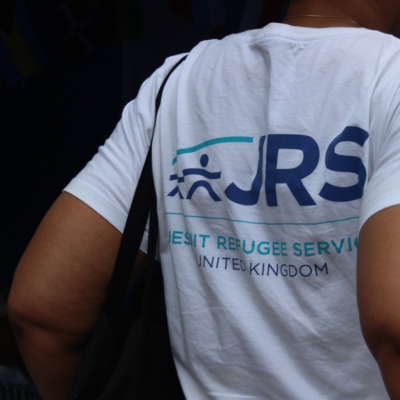
We must not allow international protection to be torn apart in this way. So, JRS UK, The Caritas Social Action Network (CSAN), and the St Vincent De Paul Society are running a campaign to defend the right to asylum.
Our asks are:
- Restore the right to asylum: end laws that punish refugees and ensure that everyone seeking safety has their claim heard fairly; end rules that make refugee protection temporary, and restore refugee family reunion;
- End immigration detention, which violates dignity and undermines justice; and
- put dignity and protection at the heart of the asylum system
75 years after the Refugee Convention came into being, join us in the struggle to defend asylum. Let’s restore the right to asylum and build an asylum system focused on protection, not punishment.
Take part in the campaign to defend asylum